


 Olivia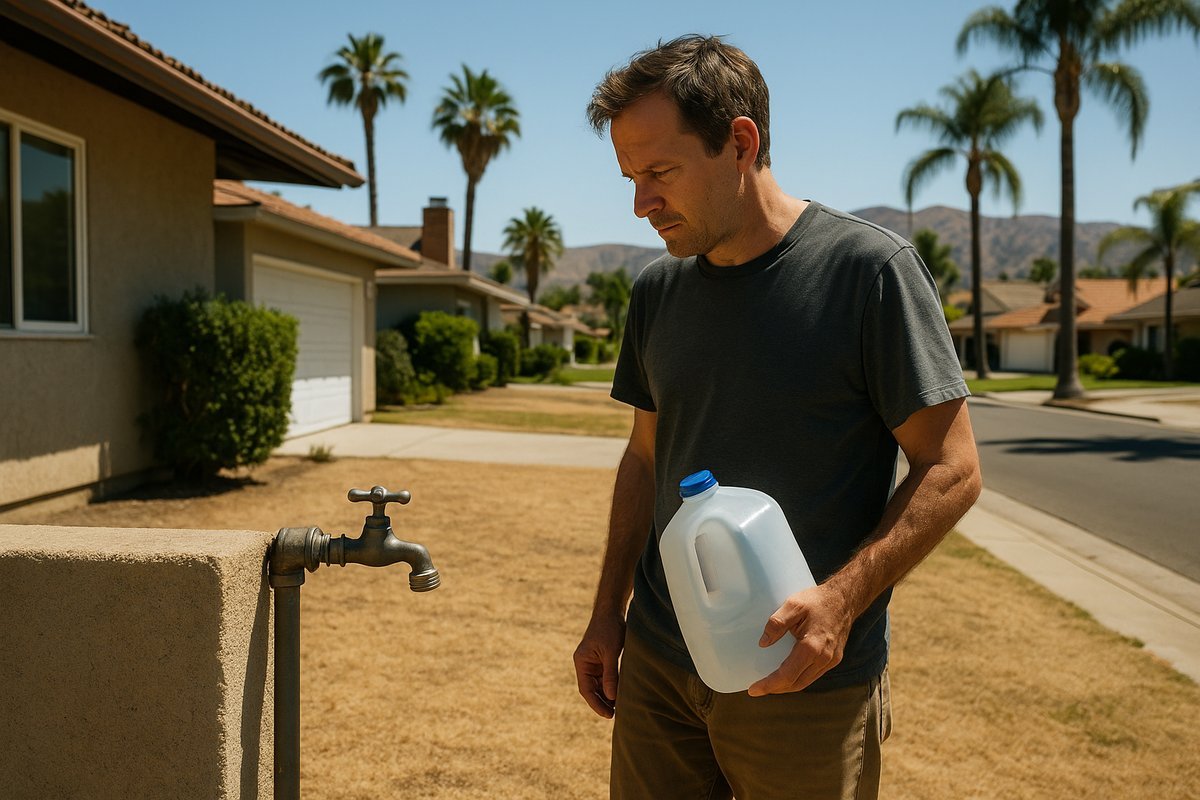
Introduction: A Sudden Disruption
Life in the suburban neighborhoods of Granada Hills and Porter Ranch was abruptly disrupted in early August 2025 when a sudden water outage left thousands of residents without a fundamental necessity. The incident, which began on a Tuesday, quickly escalated from an inconvenience to a significant crisis, highlighting the vulnerabilities of urban infrastructure and the resilience of a community faced with unexpected hardship.
During one of the warmest stretches of the year, with temperatures soaring into the 90s, the loss of water service presented a severe challenge. Simple daily routines became chaotic, forcing families to adapt quickly while officials scrambled to address the growing emergency.
The Initial Crisis: A Failed Valve Plunges Thousands into Uncertainty
The crisis began when the Los Angeles Department of Water and Power (LADWP) was conducting routine repairs at a local pump station. An underground valve, installed in the 1960s, failed to open. This valve was critical, controlling the flow of water to a 10-million-gallon tank that serves the region.
The failure cut off the water supply to a vast area, and the situation was exacerbated by the high summer demand. Despite an urgent call for conservation, the main water tank was drained by Wednesday morning, leaving a significant portion of the community completely dry.
The Scope of the Outage: 9,200 Households Affected
The impact of the Granada Hills Porter Ranch water outage was extensive, affecting approximately 9,200 LADWP customers. The affected area was broadly defined, bounded by Rinaldi Avenue to the south, Balboa Boulevard to the east, De Soto Avenue to the west, and the surrounding foothills to the north.
For five days, these households were without drinkable water, a situation that created immense stress and uncertainty. The LADWP issued a boil water advisory for the parts of the area that still had intermittent service, warning that failure to comply could lead to stomach or intestinal illness.
Community on Edge: Navigating Daily Life Without Water
Residents found themselves in long lines, waiting for bottled water as the outage stretched on. One Porter Ranch resident, Tina Kapoor, described the morning rush as “pretty chaotic” as she hurried to a store to buy water for her family. The lack of running water made basic hygiene, cooking, and sanitation incredibly difficult.
Another resident, Ralph Khelil, expressed a sense of understanding and patience, stating, “I think they’re doing their job and I wish them the best of luck.” This sentiment was shared by many who recognized the complexity of the repair, even as they grappled with the daily struggles of the water shortage.
A Setback in Repairs: The Challenge of Aging Infrastructure
Repair efforts were complicated by the location of the failed valve, which was buried 20 feet underground and obstructed by oil and gas lines. The excavation alone was projected to take over 14 hours before the actual repair work could even begin.
A major setback occurred on Saturday when a temporary pipe connection, installed as part of the repair process, burst due to a pressure spike. A resident, Armen Tchouldjian, described the moment, saying it felt “literally like a train going by” before he saw thousands of gallons of water gushing from the ground. This incident not only delayed the restoration of service but also served as a stark visual reminder of the system’s fragility.
The City’s Response: Emergency Measures and Public Safety
City officials moved quickly to mitigate the impact on the community. Mayor Karen Bass assured the public that everything possible was being done to support the affected families. The city pre-deployed firefighters and water tankers to the area to ensure emergency preparedness.
To address the immediate needs of the residents, the LADWP established several water distribution sites at local parks and community centers, providing bottled water and non-potable recycled water. Mobile laundry units, portable toilets, and even showers were made available at key locations. The LAPD also increased patrols to prevent any opportunistic crimes during the outage.
A Deeper Look: The Fragility of Our Water Systems
The Granada Hills Porter Ranch water outage brought a critical issue to the forefront: America’s aging infrastructure. The LADWP manages over 7,000 miles of water mains, with at least 30% of them being over 80 years old. Some parts of the system are even over a century old.
While the LADWP has made significant investments in recent years, including a $7 billion, 5-year plan to upgrade its systems, this event served as a powerful reminder that failures can still happen. The Office of Public Accountability noted that while LADWP’s leak rate is better than the national average, past underspending on maintenance has left certain assets with replacement cycles that extend far beyond their useful life.
Restoration and Reflection: Lessons from the Granada Hills Porter Ranch Water Outage
After days of intensive, round-the-clock work, water service was finally restored to the affected neighborhoods. The incident, which was the first regional outage caused by infrastructure failure in decades, concluded not with blame, but with a call for continued investment and transparency.
The experience underscored the importance of maintaining and funding core infrastructure operations. For the residents of Granada Hills and Porter Ranch, it was a trying week that tested their patience and resilience. For the city of Los Angeles, it was a critical lesson in the ongoing effort to ensure the reliability and safety of the water that sustains millions.