

 Olivia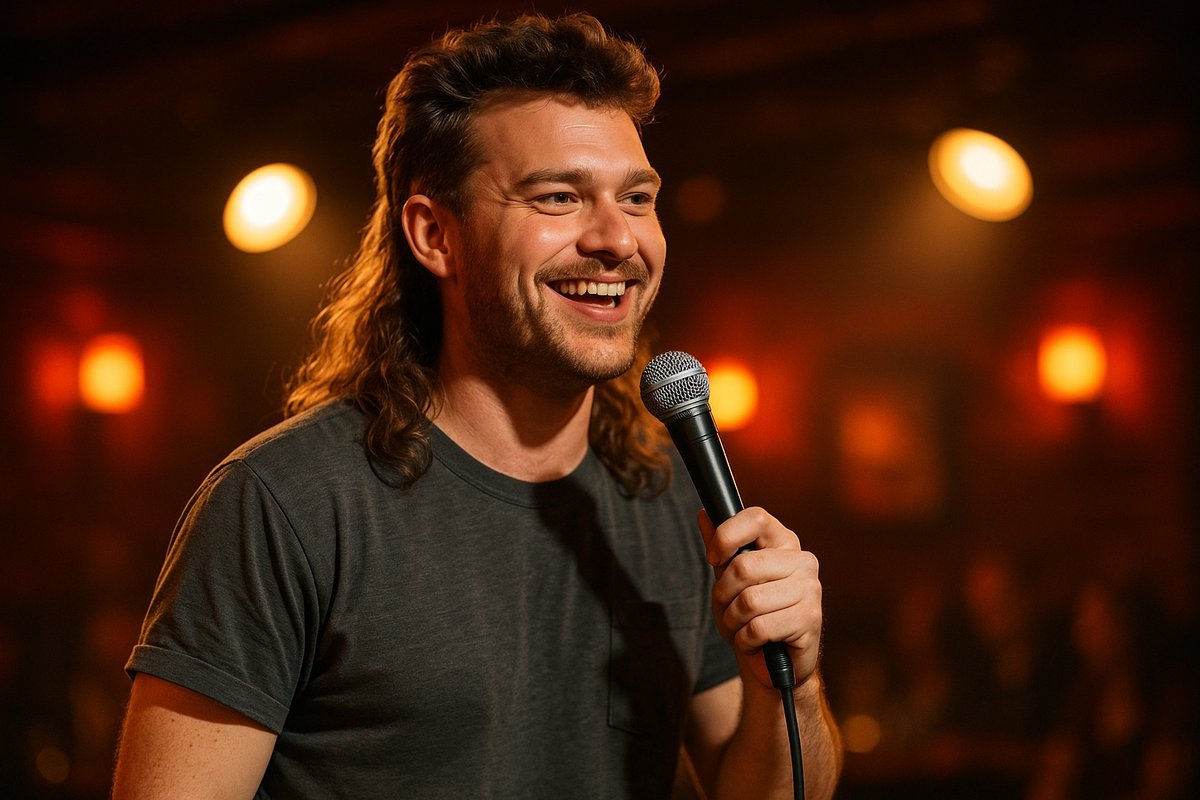
Walk into any comedy club these days, and you might spot something unexpected on stage: the mullet. That’s right, the hairstyle your dad probably regrets from his old photos is back, and it’s thriving in the world of stand-up comedy.
Comedians like Theo Von, Saul Trujillo, and Brett Blake have turned the mullet into something bigger than just a retro haircut. For them, it’s a badge of honor, a conversation starter, and sometimes the setup for their best jokes. The mullet comedian isn’t just telling jokes—they’re living one.
But what’s driving this trend? Why are some of comedy’s sharpest minds choosing a hairstyle that was once the punchline itself? The answer is more interesting than you might think.
What Makes a Mullet Comedian Stand Out
There’s something undeniably eye-catching about a comedian with a mullet. Before they even open their mouth, the audience knows they’re in for something different. The mullet sends a message: this person doesn’t play by the rules.
In comedy, where standing out can make or break a career, the mullet is a strategic choice. It’s memorable, it’s bold, and it gives the comedian instant personality. Audiences remember the guy with the mullet long after the show ends.
The hairstyle also fits perfectly with certain comedic styles. Self-deprecating humor, cultural commentary, and absurdist observations all pair well with the mullet’s inherent ridiculousness. It’s a visual gag that keeps on giving.
Famous Mullet Comedians Taking Center Stage
Theo Von – The Podcast King with Signature Locks
Theo Von might be the most famous mullet comedian working today. Born in Louisiana, Von has built an empire on his unique blend of Southern storytelling and surreal humor. His podcast, “This Past Weekend,” regularly pulls in millions of listeners who tune in as much for his perspective as for his iconic hairstyle.
Von’s mullet isn’t an accident or a phase. It’s part of his brand, instantly recognizable and frequently referenced in his material. He wears it with the kind of confidence that makes you forget it ever went out of style in the first place.
His career trajectory shows how a distinctive look can amplify a comedian’s reach. Von has appeared on Netflix, Comedy Central, and countless podcasts, always sporting his signature locks. The mullet has become synonymous with his name.
Saul Trujillo – The California Mullet Master
Saul Trujillo takes a different approach to the mullet comedian persona. As a first-generation Mexican-American from Stockton, California, Trujillo uses his hairstyle as a jumping-off point for jokes about identity, appearance, and cultural expectations.
His most famous bit describes his mullet as looking like “a missing child’s poster in the front and the guy who kidnapped that kid in the back.” It’s a perfect example of how mullet comedians turn their appearance into material. The joke wouldn’t land the same way without the visual.
Trujillo’s comedy is sharp and self-aware. He knows exactly what his mullet says about him, and he’s not afraid to lean into the absurdity. That willingness to laugh at himself makes him all the more likable.
Brett Blake – Australia’s Mullet Legend
Brett Blake has earned his title as “The man, the mullet, the legend” through years of high-energy performances across Australia. His comedy is raw, unpredictable, and perfectly matched to his wild hairstyle.
Blake’s career includes sold-out comedy festival runs, television appearances, and even acting roles. Through it all, the mullet has remained a constant. It’s become so associated with his persona that fans can’t imagine him without it.
Recently, Blake went viral for getting his mullet trimmed by an Arabic barber, turning even a haircut into comedy content. That’s the power of the mullet comedian—every aspect of the look becomes part of the act.
The Cultural Significance Behind the Mullet
To understand the mullet comedian, you need to understand the mullet itself. This hairstyle has been through more cultural shifts than most fashion trends could survive.
David Bowie popularized it in the early 1970s during the glam rock era, using it to blur gender lines and create a theatrical image. Throughout the 1980s, rock stars and action heroes made it the height of cool. Then came the 1990s, when the mullet became a symbol of bad taste and cultural backwardness.
For years, the mullet was a joke—something people wore ironically at costume parties. But something shifted in the last few years. Gen Z discovered it, social media embraced it, and suddenly the mullet was cool again. This time, though, it carried all its history with it. The modern mullet is worn with full awareness of its complicated past.
Why Comedians Choose the Mullet Hairstyle
Comedians are drawn to the mullet for several reasons, and none of them are accidental. First, it’s a visual statement that requires no explanation. The moment a mullet comedian walks on stage, the audience knows they’re dealing with someone who doesn’t care about conventional standards.
Second, the mullet provides endless material. It’s a built-in conversation piece that can be referenced, mocked, or celebrated depending on the bit. Smart comedians use their appearance as a tool, and the mullet is one of the most versatile tools available.
Third, there’s an element of rebellion baked into the choice. Comedy has always been about challenging norms and making people uncomfortable. What better way to do that than with a hairstyle that society has repeatedly rejected?
The mullet also signals confidence. It takes a certain kind of person to rock a mullet in public, let alone on stage in front of hundreds of people. That confidence translates directly into stage presence.
The Psychology of the Mullet in Comedy
People who wear mullets tend to share certain personality traits. They’re often described as confident, fun-loving, and a bit rebellious. They don’t take themselves too seriously, but they’re serious about not being boring.
In the context of comedy, these traits are gold. A comedian needs to be confident enough to face down a tough crowd. They need to be fun enough to keep the audience engaged. And they need to be rebellious enough to say things others won’t.
The mullet also makes comedians more approachable. It’s a humanizing touch that says, “I’m willing to look ridiculous for your entertainment.” That vulnerability creates a connection with the audience that can make even edgy material land better.
Psychologically, the mullet creates a memorable image. Our brains are wired to remember unusual things, and a comedian with a mullet definitely qualifies. That memorability can be the difference between a comedian who gets booked again and one who fades into obscurity.
The Modern Mullet Movement in Entertainment
The mullet’s comeback isn’t limited to comedy clubs. Across entertainment and culture, the hairstyle is experiencing a genuine renaissance. Athletes, musicians, and actors are all getting in on the trend.
Part of this resurgence can be traced to the pandemic. When lockdowns forced people to rethink their relationship with work and social norms, many decided they were done playing it safe. The mullet became a symbol of that new attitude—a middle finger to corporate culture and conventional expectations.
Social media accelerated the trend. TikTok and Instagram are filled with mullet transformations, styling tips, and appreciation posts. The algorithm loves a good mullet, and the mullet loves going viral.
For comedians, this broader cultural acceptance means their choice is less risky than it might have been a decade ago. The mullet is no longer just a punchline—it’s a legitimate style choice that happens to be very funny.
Conclusion
The mullet comedian represents something larger than a hairstyle trend. They embody a spirit of rebellion, self-awareness, and fearlessness that comedy has always celebrated.
As long as there are comedians willing to take risks and audiences hungry for something different, the mullet will have a place on stage. It’s a reminder that sometimes the best way to be taken seriously is to not take yourself too seriously at all.
The business in the front might be comedy, but the party in the back? That’s pure entertainment.